
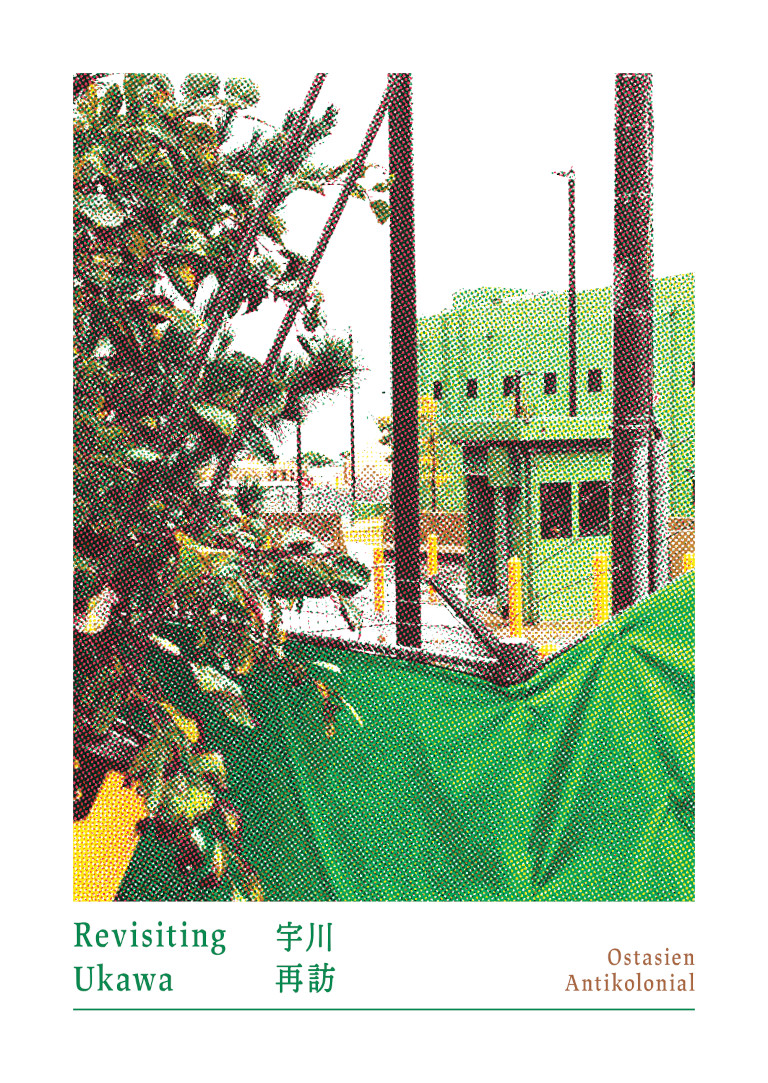
Revisiting Ukawa Zine / 宇川再訪 Zine
Mini-zine part2, based on photos from our visit to Ukawa in November 2025.
ミニzineパート2です。2025年11月に京丹後・宇川を訪問した際の記録をもとにしています。
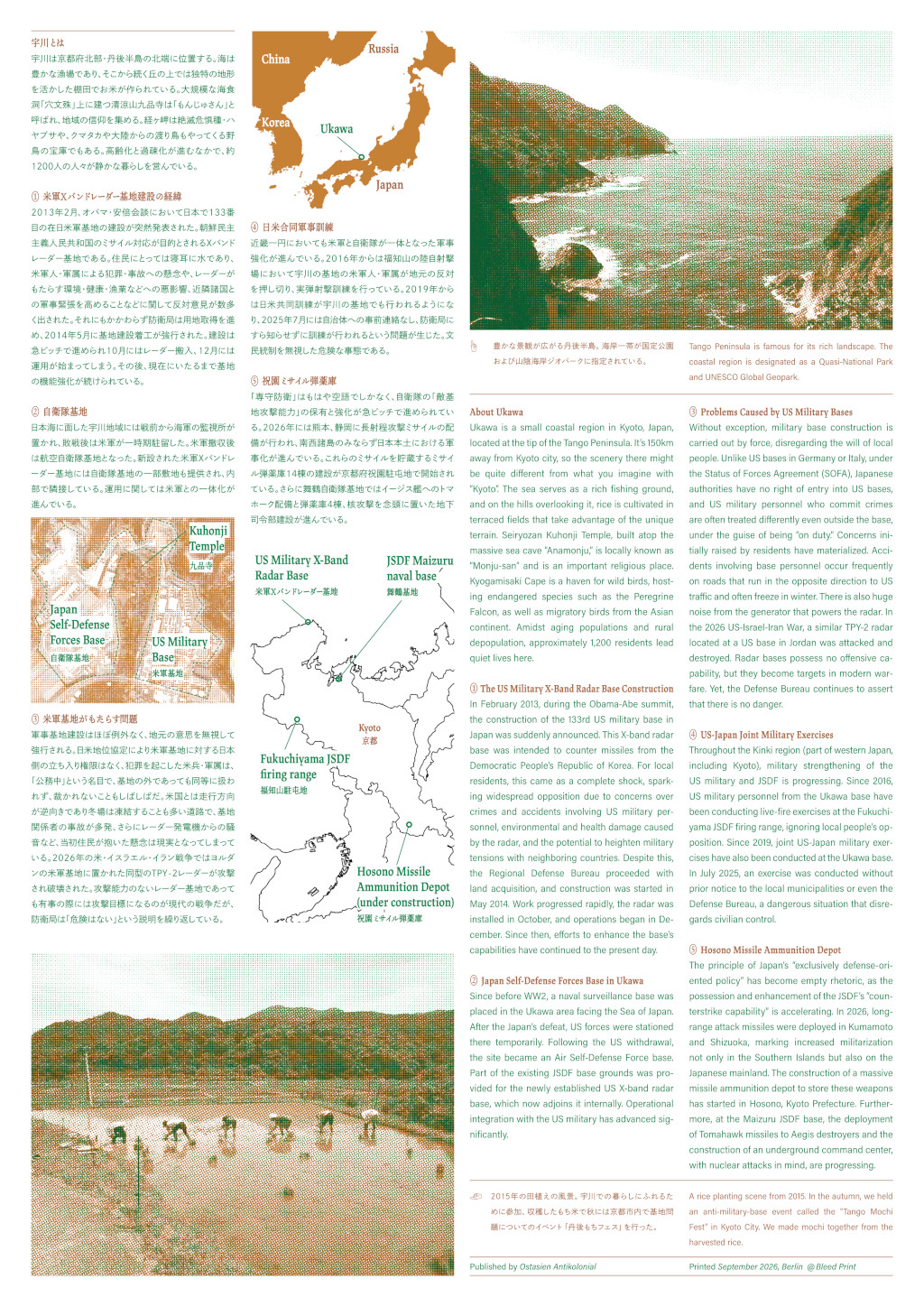
(text from the back page)
About Ukawa
Ukawa is a small coastal region in Kyoto, Japan, located at the tip of the Tango Peninsula. It’s 150km away from Kyoto city, so the scenery there might be quite different from what you imagine with “Kyoto”. The sea serves as a rich fishing ground, and on the hills overlooking it, rice is cultivated in terraced fields that take advantage of the unique terrain. Seiryozan Kuhonji Temple, built atop the massive sea cave "Anamonju," is locally known as "Monju-san" and is an important religious place. Kyogamisaki Cape is a haven for wild birds, hosting endangered species such as the Peregrine Falcon, as well as migratory birds from the Asian continent. Amidst aging populations and rural depopulation, approximately 1,200 residents lead quiet lives here.
The US Military X-Band Radar Base Construction
In February 2013, during the Obama-Abe summit, the construction of the 133rd US military base in Japan was suddenly announced. This X-band radar base was intended to counter missiles from the Democratic People's Republic of Korea. For local residents, this came as a complete shock, sparking widespread opposition due to concerns over crimes and accidents involving US military personnel, environmental and health damage caused by the radar, and the potential to heighten military tensions with neighboring countries. Despite this, the Regional Defense Bureau proceeded with land acquisition, and construction was started in May 2014. Work progressed rapidly, the radar was installed in October, and operations began in December. Since then, efforts to enhance the base's capabilities have continued to the present day.
Japan Self-Defense Forces Base in Ukawa
Since before WW2, a naval surveillance base was placed in the Ukawa area facing the Sea of Japan. After the Japan’s defeat, US forces were stationed there temporarily. Following the US withdrawal, the site became an Air Self-Defense Force base. Part of the existing JSDF base grounds was provided for the newly established US X-band radar base, which now adjoins it internally. Operational integration with the US military has advanced significantly.
Problems Caused by US Military Bases
Unlike US bases in Germany or Italy, under the Status of Forces Agreement (SOFA), Japanese authorities have no right of entry into US bases. US military personnel who commit crimes are often treated differently even outside the base, under the guise of being "on duty." Concerns initially raised by residents have materialized. The base personnel cause traffic accidents frequently on roads that run in the opposite direction to US traffic and often freeze in winter. There is also huge noise from the generator that powers the radar. In the 2026 US-Israel-Iran War, a similar TPY-2 radar located at a US base in Jordan was attacked and destroyed. Radar bases possess no offensive capability, but they become targets in modern warfare. Yet, the Defense Bureau continues to assert that there is no danger.
US-Japan Joint Military Exercises
Throughout the Kinki region (part of western Japan, including Kyoto), military strengthening of the US military and JSDF is progressing. Since 2016, US military personnel from the Ukawa base have been conducting live-fire exercises at the Fukuchiyama JSDF firing range, ignoring local people's opposition. Since 2019, joint US-Japan military exercises have also been conducted at the Ukawa base. In July 2025, an exercise was conducted without prior notice to the local municipalities or even the Defense Bureau, a dangerous situation that disregards civilian control.
Hosono Missile Ammunition Depot
The principle of Japan’s "exclusively defense-oriented policy" has become empty rhetoric, as the possession and enhancement of the JSDF’s "counterstrike capability" is accelerating. In 2026, long-range attack missiles were deployed in Kumamoto and Shizuoka, marking increased militarization not only in the Southern Islands but also on the Japanese mainland. The construction of a massive missile ammunition depot to store these weapons has started in Hosono, Kyoto Prefecture. Furthermore, at the Maizuru JSDF base, the deployment of Tomahawk missiles to Aegis destroyers and the construction of an underground command center, with nuclear attacks in mind, are progressing.
(裏面のテキスト)
宇川とは
宇川は京都府北部・丹後半島の北端に位置する。海は豊かな漁場であり、そこから続く丘の上では独特の地形を活かした棚田でお米が作られている。大規模な海食洞「穴文殊」上に建つ清涼山九品寺は「もんじゅさん」と呼ばれ、地域の信仰を集める。経ヶ岬は絶滅危惧種・ハヤブサや、クマタカや大陸からの渡り鳥もやってくる野鳥の宝庫でもある。高齢化と過疎化が進むなかで、約1200人の人々が静かな暮らしを営んでいる。
米軍Xバンドレーダー基地建設の経緯
2013年2月、オバマ・安倍会談において日本で133番目の在日米軍基地の建設が突然発表された。朝鮮民主主義人民共和国のミサイル対応が目的とされるXバンドレーダー基地である。住民にとっては寝耳に水であり、米軍人・軍属による犯罪・事故への懸念や、レーダーがもたらす環境・健康・漁業などへの悪影響、近隣諸国との軍事緊張を高めることなどに関して反対意見が数多く出された。それにもかかわらず防衛局は用地取得を進め、2014年5月に基地建設着工が強行された。建設は急ピッチで進められ10月にはレーダー搬入、12月には運用が始まってしまう。その後、現在にいたるまで基地の機能強化が続けられている。
自衛隊基地
日本海に面した宇川地域には戦前から海軍の監視所が置かれ、敗戦後は米軍が一時期駐留した。米軍撤収後は航空自衛隊基地となった。新設された米軍Xバンドレーダー基地には自衛隊基地の一部敷地も提供され、内部で隣接している。運用に関しては米軍との一体化が進んでいる。
米軍基地がもたらす問題
軍事基地建設はほぼ例外なく、地元の意思を無視して強行される。日米地位協定により米軍基地に対する日本側の立ち入り権限はなく、犯罪を起こした米兵・軍属は、「公務中」という名目で、基地の外であっても同等に扱われず、裁かれないこともしばしばだ。米国とは走行方向が逆向きであり冬場は凍結することも多い道路で、基地関係者の事故が多発、さらにレーダー発電機からの騒音など、当初住民が抱いた懸念は現実となってしまっている。2026年の米・イスラエル・イラン戦争ではヨルダンの米軍基地に置かれた同型のTPY-2レーダーが攻撃され破壊された。攻撃能力のないレーダー基地であっても有事の際には攻撃目標になるのが現代の戦争だが、防衛局は「危険はない」という説明を繰り返している。
日米合同軍事訓練
近畿一円においても米軍と自衛隊が一体となった軍事強化が進んでいる。2016年からは福知山の陸自射撃場において宇川の基地の米軍人・軍属が地元の反対を押し切り、実弾射撃訓練を行っている。2019年からは日米共同訓練が宇川の基地でも行われるようになり、2025年7月には自治体への事前連絡なし、防衛局にすら知らせずに訓練が行われるという問題が生じた。文民統制を無視した危険な事態である。
祝園ミサイル弾薬庫
「専守防衛」はもはや空語でしかなく、自衛隊の「敵基地攻撃能力」の保有と強化が急ピッチで進められている。2026年には熊本、静岡に長射程攻撃ミサイルの配備が行われ、南西諸島のみならず日本本土における軍事化が進んでいる。これらのミサイルを貯蔵するミサイル弾薬庫14棟の建設が京都府祝園駐屯地で開始されている。さらに舞鶴自衛隊基地ではイージス艦へのトマホーク配備と弾薬庫4棟、核攻撃を念頭に置いた地下司令部建設が進んでいる。